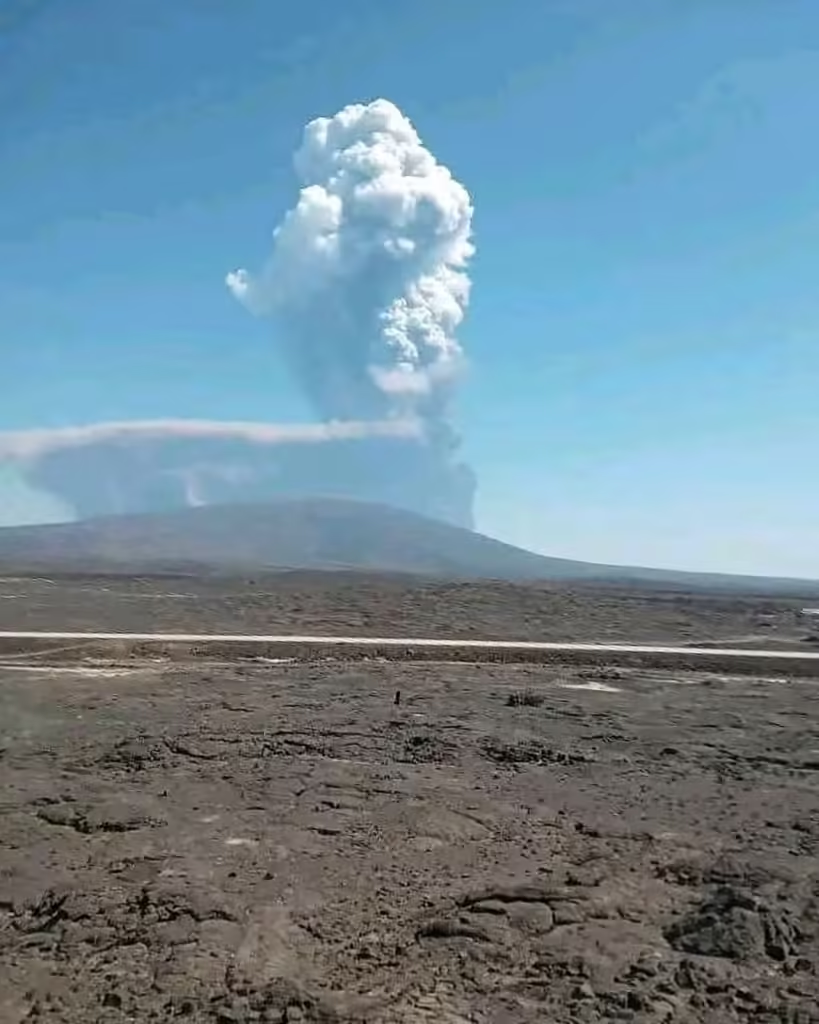
Ethiopia has captured global attention after the long-dormant Hayli Gubbi volcano suddenly reawakened for the first time in thousands of years. The eruption pushed vast clouds of ash high into the atmosphere, spreading across several countries in Africa and Asia. This rare geological event has raised serious concerns for nearby communities, as villages and farmlands are now covered in ash and international flights face disruptions. Local herders have been especially affected, with their grazing lands heavily blanketed in volcanic dust.
The Hayli Gubbi mountain in Ethiopia’s Afar Region erupted early Sunday, shaking nearby communities with a loud blast that many residents described as frightening. Locals said it felt like an explosion as the ground rumbled and dark smoke rose instantly into the sky. Villages surrounding the volcano were blanketed in ash, creating major challenges for farmers and livestock keepers who depend on clean grazing fields.
Satellite images captured huge columns of ash drifting over the Red Sea and stretching toward the Arabian Peninsula. Meteorological agencies confirmed that ash from the event moved across Yemen, Oman, Pakistan, and even reached India. Pakistan’s weather authority issued an alert after ash entered its airspace, while India reported several canceled flights as airlines inspected aircraft that had flown near the drifting cloud.
Air India and other carriers carried out precautionary checks on their fleets, leading to multiple domestic and international flight disruptions. India’s meteorological service noted that although Delhi is currently battling severe air pollution, the volcanic ash is too high in the atmosphere to worsen conditions on the ground.
Experts said the ash plume reached extremely high altitudes, carried by strong winds in the upper atmosphere. The Toulouse Volcanic Ash Advisory Center observed that the cloud moved rapidly eastward, expanding across the region.
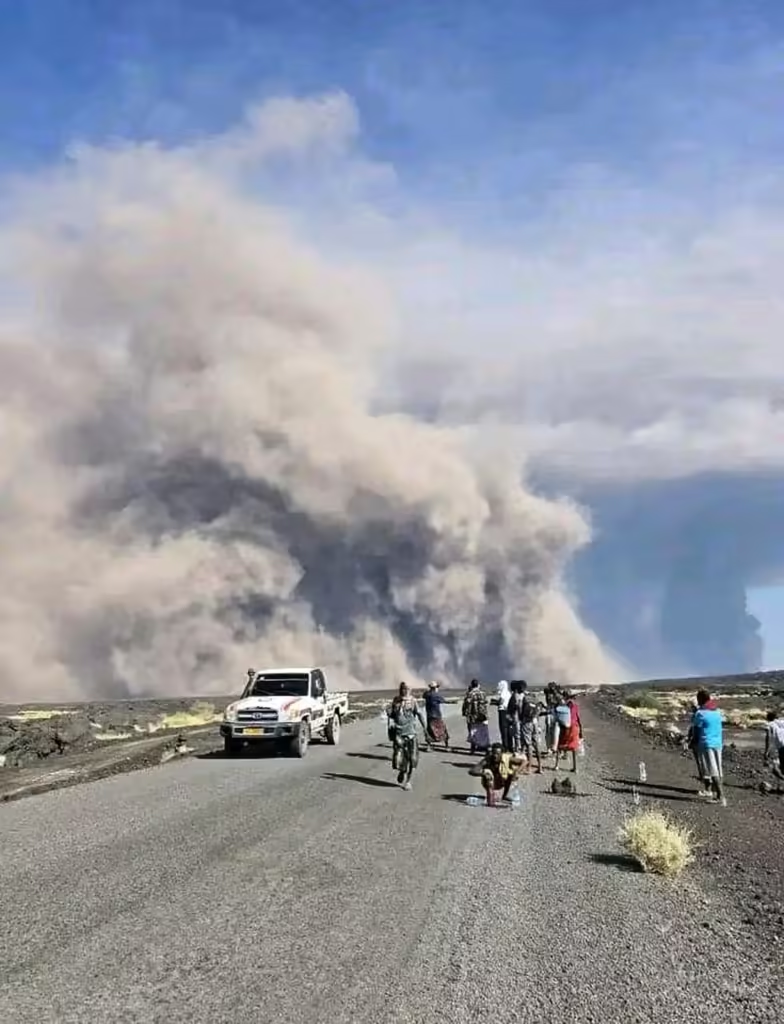
The Hayli Gubbi volcano sits about 800 kilometers northeast of Addis Ababa and forms part of the volcanic Erta Ale Range in one of the most geologically active zones on Earth. The area lies where tectonic plates meet, making it prone to quakes and volcanic activity. Scientists believe the last eruption occurred more than 10,000 years ago, making this event one of the rarest eruptions in modern history.
Although no casualties have been reported, local officials fear long-term economic damage. Many herders depend on land now buried under ash, leaving their animals with limited food sources. Community leaders warn that continued ash fallout could worsen conditions in the coming days.
The Hayli Gubbi volcano eruption has now weakened, but images still show grey smoke rising from the volcano’s summit. Experts continue to monitor seismic activity in the region as the world watches one of the most unexpected natural events in recent decades.
Follow for Updates!
Facebook: Newton Meshak
TikTok: @Mrrpoat